Explore expert articles, clinical guides, surgical technique updates, and global market trends.
In-depth technical guides for pedicle screws, locking plates, PEEK cages, and surgical instruments.
Market analyses, regulatory developments, and export insights for orthopedic distributors worldwide.
Choosing a China-based supplier for a Thompson Hip Prosthesis takes more than comparing prices. This implant is a familiar option for selected hip-fracture procedures, but suitability depends on the patient and the surgeon’s clinical judgment. Buyers should check the product’s stated dimensions, material specifications, and compatibility with the intended surgical approach. Small details matter. A clear product label and consistent documentation can make evaluation easier.
A supplier review should also consider manufacturing controls, traceability, inspection records, and responses to technical questions. Ask for current product documentation and evidence supporting the supplier’s quality claims; do not rely on catalog images alone. If available, examine sample packaging, component markings, and instructions for use. These details help reveal how carefully information is presented. Still, a polished website is not proof of dependable production, and a low quote may leave important questions unanswered. It is wise to verify claims independently and consult qualified medical and procurement professionals before making decisions. No supplier should be called “top” without defined criteria, such as product consistency, documentation quality, communication, and delivery performance. The comparison may feel less straightforward than expected. That is a useful reason to look beyond rankings and assess the evidence behind each claim.
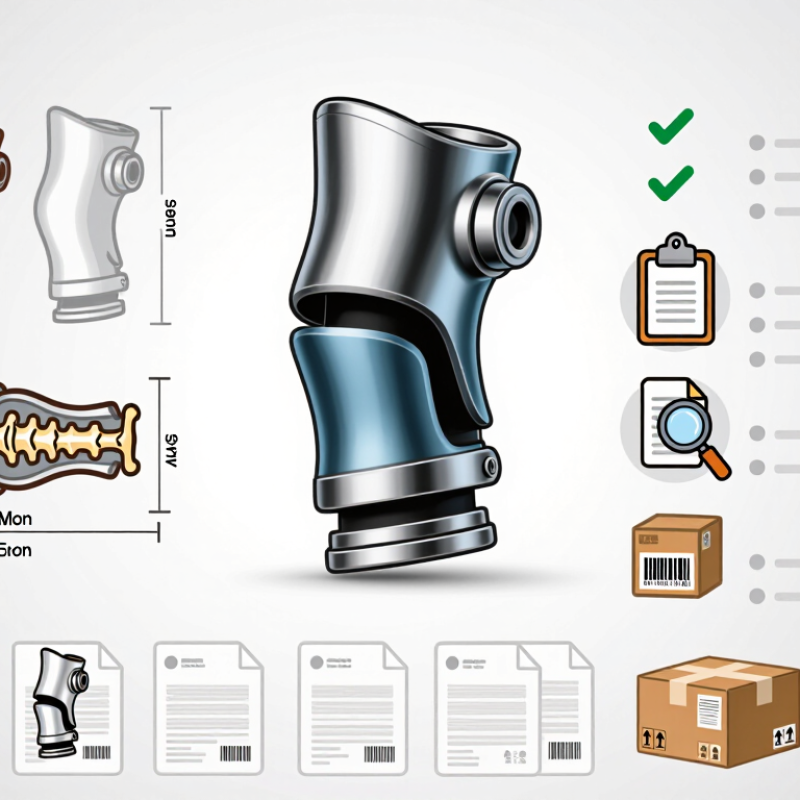
Thompson hemiarthroplasty may be considered for selected older adults with a displaced intracapsular femoral-neck fracture. The decision depends on mobility before injury, medical fitness, bone quality, and the patient’s goals. NICE recommends considering total hip replacement for people who walked independently outdoors, are medically suitable, and are expected to remain independent in daily activities for more than two years. For others, hemiarthroplasty may be appropriate. The implant alone does not determine good care.
Timing matters. NICE recommends surgery on the day of admission or the following day, with mobilisation the day after surgery when possible. The National Hip Fracture Database’s annual reports track measures including surgery within 36 hours, mobilisation, length of stay, and mortality. These figures help teams compare care, but they do not explain every delay or individual outcome.
A stable patient may still need close monitoring; pain, confusion, and a slow first step can complicate recovery. That detail is easy to underestimate. Surgeons should document why a Thompson stem suits the patient, and teams should review progress against clear, locally reported metrics.
One limitation remains: audit targets can reveal gaps, but cannot replace clinical judgement.
For a Thompson-style hemiarthroplasty, femoral head diameter is a measured fit, not a cosmetic choice. The selected head should restore the patient’s anatomy and move smoothly against the acetabulum. Sizes and increments vary by implant system, so surgeons confirm fit with trial components and direct assessment. A head that is too large may over-tension soft tissue; one that is too small can compromise stability. Fit matters. The National Joint Registry’s 2024 Annual Report emphasizes the value of monitoring implant outcomes over time, but registry results cannot replace patient-specific sizing.
Stem geometry matters just as much. Length, taper, and cross-section affect insertion, load transfer, and stability within the femur. A straight stem may suit one canal; another femur may need a different geometry. Small differences count. Material specifications should be stated precisely: ASTM F75 defines cast cobalt-chromium-molybdenum alloy, with nominally 28% chromium and 6% molybdenum. ISO 5832-1 covers wrought stainless steel for surgical implants. These standards help buyers verify material identity and manufacturing documentation. Yet a compliant alloy alone does not prove good clinical performance. I would still ask for traceable material certificates, dimensional drawings, and evidence that each head size matches the intended stem design. That detail is easy to overlook.
When assessing a China-based Thompson hip prosthesis supplier, verify that its ISO 13485:2016 certificate is current and covers the relevant manufacturing site and activities. Check the NMPA registration details against the exact product model, intended use, and manufacturer named in the supplier’s documents. A certificate alone is not enough. Ask for evidence that the offered device matches the registered product.
Traceability should connect each finished-device lot to its production records, material documentation, inspection results, and shipment records. Confirm how quickly the supplier can retrieve those records during a quality investigation. The World Health Organization’s Global Patient Safety Report 2024 estimates that about one in ten patients experiences harm in healthcare. This is not a hip-implant failure rate, but it underlines why dependable quality systems matter. Paperwork can still leave gaps; check sample records, not just assurances.
Tips: Request a redacted lot file and compare its model, site, and dates with the certificates. Verify registration through official NMPA records. If a document is unclear, ask for clarification before purchase.
Each bar represents one distinct evidence area to verify: a current ISO 13485:2016 certificate and its scope, applicable NMPA registration records, and traceability documentation linking products to relevant manufacturing and distribution records. This checklist does not confirm the credentials of any specific supplier.
Mechanical verification begins with a clear distinction: ISO 7206-4 evaluates the endurance of stemmed femoral components under cyclic loading, while ISO 7206-5 addresses static strength at the head-neck region. They test different failure risks. One does not replace the other.
A five-million-cycle fatigue run can expose cracks, deformation, or fixation changes under repeated loading. But the number alone proves little. Load level, stem size, alignment, fixture, and failure criteria must be reported, since each can change the result. ISO methods help standardize these conditions; suppliers should provide traceable protocols and test reports for the specific component configuration. Numbers matter. A passing laboratory test is not a clinical lifespan guarantee.
The UK National Joint Registry’s 21st Annual Report (2024) contains more than three million procedure records, illustrating why implant performance must also be monitored in clinical use. Registry outcomes reflect patients, surgical technique, and follow-up, not fatigue testing alone. That distinction deserves attention. A useful supplier review should connect mechanical evidence with material specifications, manufacturing controls, and post-market data. I would still ask whether the tested stem matches the supplied version exactly; small geometry changes can matter.
| Verification Dimension | Technical Information | Reporting or Interpretation |
|---|---|---|
| Standard reference | ISO 7206-4, Implants for surgery — Partial and total hip joint prostheses — Determination of endurance properties and performance of stemmed femoral components. | Record the edition and any applicable amendments used for the test. |
| Scope of application | The standard addresses endurance properties and performance of stemmed femoral components under specified test conditions. | Confirm that the specific implant design and configuration fall within the standard’s scope before claiming conformity. |
| Test objective | Assess the stemmed component’s resistance to cyclic loading using the applicable standardized test setup. | Report the test method, specimen configuration, loading conditions, and observed outcome. |
| Cycle target | 5,000,000 cycles is a commonly used fatigue-test endpoint when specified by the applicable protocol. | State the achieved cycle count. A cycle target alone does not establish a pass or demonstrate that every ISO 7206-4 test uses the same endpoint. |
| Specimen identification | Document the component design, size, material, manufacturing condition, and fixation configuration tested. | Results apply to the tested configuration; identify any differences from the marketed device. |
| Load and fixture details | The load, alignment, fixture, and specimen support must follow the selected standard edition and documented test plan. | Publish the actual test settings from the laboratory report; they should not be inferred from the cycle count. |
| Acceptance and observations | Record fractures, visible damage, interruptions, and any other outcomes required by the test method or protocol. | Define acceptance criteria in advance and report deviations; do not treat completion of the target cycles by itself as proof of compliance. |
| Related mechanical testing | ISO 7206-5 addresses resistance to static load of the head and neck region of stemmed femoral components. | Static testing under ISO 7206-5 is distinct from endurance testing under ISO 7206-4 and should be reported separately. |
| Results status | No product-specific laboratory measurements or pass/fail results are provided in this table. Insert verified test-report data before making performance or conformity claims. | |
A credible comparison of Chinese suppliers of Thompson hip prostheses should start with clinical evidence, not catalog claims. Ask for outcome data linked to the exact implant design and patient group. Useful measures include pain, mobility, complications, and follow-up duration. Results from older patients with fractures may not apply to other groups. Not a simple ranking.
Revision rates need careful reading. Check how revisions are defined, how many patients were followed, and whether losses to follow-up are reported. A low rate means little without that context. Surgical technique and patient health also affect results, so supplier data cannot tell the whole story. I would hesitate to name a “top” supplier when comparable, independently reviewed studies are unavailable. That gap matters.
Export records can help assess consistency, but they do not prove clinical performance. Request shipment histories by product type, destination, and year, alongside traceability documents and batch records. Compare those records with certificates and the supplier’s stated production capacity. Look for dates, quantities, and matching product descriptions. Missing details deserve a written explanation, not an assumption of wrongdoing. A careful buyer should verify claims directly and involve qualified clinical and procurement reviewers before making a decision.
Confirm that the quality certificate is current and covers the actual manufacturing site and activities. Check the product registration, model, intended use, and named manufacturer. A certificate alone is not enough.
Compare the model and manufacturer on the registration with the supplier’s documents. Verify the registration in official records. Ask for clarification if details are unclear.
It should link a finished-device lot to production records, material documents, inspection results, and shipment records. Request a redacted sample. Check the dates.
Ask the supplier to demonstrate its retrieval process during a quality investigation. The article gives no required response time, so agree on one before purchase. Paperwork can still have gaps.
ISO 7206-4 evaluates cyclic endurance of stemmed femoral components. ISO 7206-5 assesses static strength at the head-neck region. They address different risks.
Check the load level, stem size, alignment, fixture, and failure criteria. These details can change the result. The cycle count alone proves little.
No. It shows performance under the reported laboratory conditions, not a guaranteed lifespan in patients. Not by itself.
Laboratory tests and clinical outcomes measure different things. Registry results can reflect patients, surgical technique, and follow-up. A 2024 registry report included over three million procedure records.
Confirm that the tested stem matches the supplied version exactly. Small geometry changes may matter. I would still ask for the specific configuration and its traceable test report.
This article examines how to assess a China-based supplier of the Thompson Hip Prosthesis, beginning with the procedure’s role in hemiarthroplasty and its use in selected hip-fracture cases. It highlights care metrics buyers may review, such as treatment pathways, complication monitoring, and recovery outcomes. The discussion also covers implant design, including femoral head sizes, stem geometry, and material specifications, and explains why these details should be matched to clinical needs and supported by clear technical documentation.
Supplier evaluation should extend beyond product descriptions. The article outlines how to verify quality-management credentials, applicable NMPA registration, and component traceability, then review mechanical evidence such as ISO 7206-4 testing and reported five-million-cycle fatigue testing. Finally, it presents a framework for comparing suppliers through documented clinical outcomes, revision-rate data, and export records, emphasizing that claims should be checked against reliable, current evidence before procurement decisions are made.