0%

In 2026, “top” Spine Implants are not simply the newest devices or the ones with the most advanced materials. The right choice depends on the diagnosis, spinal level, bone quality, symptoms, and treatment goals. A compact titanium screw may anchor a fusion, while an interbody cage supports the space between vertebrae. Cervical plates, artificial discs, and vertebral body replacement devices serve different clinical needs. They are not interchangeable.

Spine researcher Dr. Richard Deyo’s work offers an important caution: more invasive treatment does not automatically mean better care. That is a paraphrase of his evidence-focused perspective, not a direct quotation. Keep that distinction in mind. Implant selection should follow careful assessment and discussion of expected benefits, risks, and alternatives—not a trend or a product label.

This overview compares common implant categories, including pedicle screw-and-rod systems, interbody cages, cervical fixation devices, and artificial discs. It also explains how materials such as titanium and PEEK can affect design and surgical use. A device that works well for one patient may be unsuitable for another. Even small details matter, from a cage’s footprint on the vertebral endplate to the level of support needed after surgery. Evidence also changes over time, and not every new design has long-term results. That uncertainty deserves attention. The goal is a clear, practical guide to what these implants do, where they may fit, and which questions patients can raise with a qualified spine specialist.
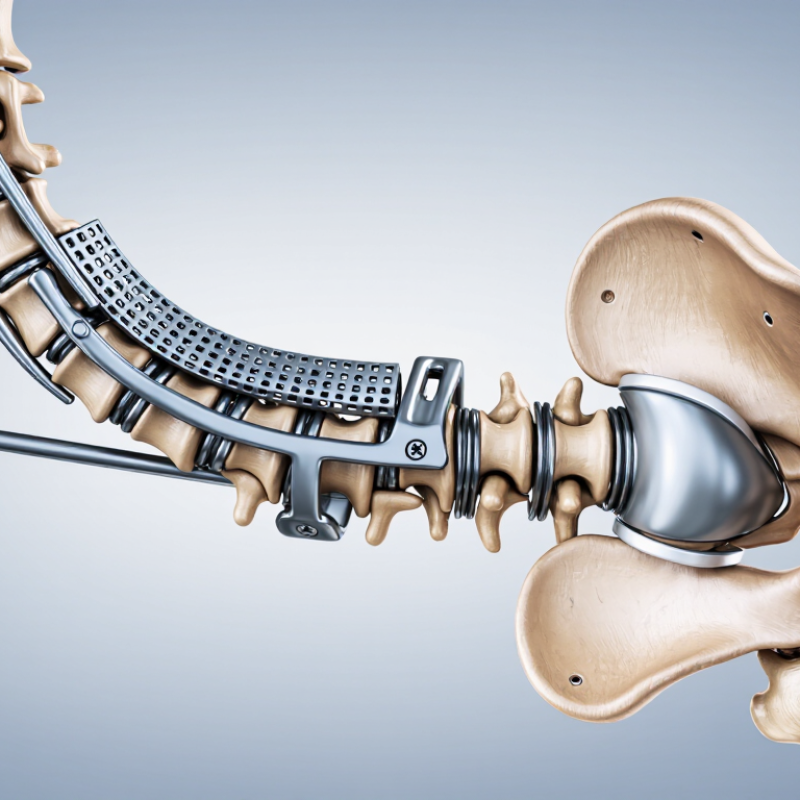
What Are the Top Spine Implant Types in 2026?

Pedicle Screw–Rod Systems: Four Screws Commonly Anchor a One-Level Fusion

For a one-level lumbar fusion, a common pedicle screw–rod construct uses four screws: two in each of the two adjacent vertebrae. Rods connect the screws and help stabilize the segment while bone graft heals. The phrase “four screws” sounds tidy; real anatomy is less tidy. Bone strength, vertebral shape, and the surgical plan can change the construct.

AHRQ’s HCUP Statistical Brief #135 reported that U.S. inpatient stays involving spinal fusion increased 70% from 2001 to 2011. That historical figure describes procedure volume, not proof that one screw configuration works best. Screw placement and fixation choices depend on individual imaging and clinical judgment. Some patients may need a different approach. Not always.

Tips: Ask your surgeon why this construct suits your anatomy, what alternatives were considered, and how bone quality may affect fixation. A useful question: “How will you check that the screws and rods are positioned as planned?” The answer should connect the device choice to your specific scans and treatment goals.

Typical Components of a One-Level Pedicle Screw–Rod Fusion

A typical one-level posterior fusion spans two adjacent vertebrae. Four pedicle screws—two in each vertebra—are commonly connected by two rods. Other components, such as an interbody cage, may be used depending on the surgical approach and patient.

Interbody Cages: Four Main Lumbar Routes Include ALIF, PLIF, TLIF, and LLIF

Interbody cages sit between two vertebrae after a damaged disc is removed. They help support the space while bone fusion develops. In lumbar surgery, the route to that space shapes what the surgeon can see and which tissues must be moved. The access differs. These procedures are not interchangeable.

ALIF reaches the disc from the abdomen, often providing a broad view of the front of the spine. PLIF approaches through the back and works on both sides of the spinal canal. TLIF also uses a posterior route, but approaches the disc from one side. LLIF reaches it through the side of the body, passing through the psoas muscle. Each route has different anatomical considerations, and none is automatically best for every patient.

The choice depends on factors such as spinal alignment, prior surgery, bone quality, and nearby nerves and blood vessels. A cage may be paired with screws or rods for added stability. Small details matter: a person’s anatomy can make a usual route less suitable. Imaging and a surgeon’s examination help guide planning, but they do not make every uncertainty disappear. The labels can make the decision sound simpler than it is. A careful discussion should cover expected benefits, route-specific risks, and alternatives.

Cervical Artificial Discs: FDA-Approved Devices Cover 1- and 2-Level Surgery

Cervical artificial discs are approved for selected adults with one or two adjacent diseased levels in the neck. FDA approval documents define specific eligibility criteria, including the spinal levels treated and conditions that may rule out surgery. The goal is to remove the damaged disc while preserving motion between the vertebrae. Not every patient is a candidate.

Evidence differs by procedure and patient. A 10-year follow-up of a randomized, FDA-regulated two-level clinical trial reported overall success in 80.4% of disc-replacement patients, compared with 62.2% of fusion patients. The findings appeared in the International Journal of Spine Surgery. That is meaningful, but it is not a promise for any individual. Trial results depend on selection criteria, follow-up, and how success is defined.

One-level and two-level surgery are not interchangeable decisions. Imaging, nerve symptoms, bone quality, and the number of affected discs all shape the discussion. A surgeon may explain the trade-off using a simple image: a replacement disc can allow movement, while fusion joins the bones. The details matter. Long-term evidence is encouraging, yet not perfectly tidy; outcomes and risks vary, and some patients still need further treatment. Ask how closely your condition matches the populations studied in FDA-reviewed trials.

Vertebral Body Replacement Cages: FDA Indications Can Cover 1–2 Contiguous Vertebrae

Vertebral body replacement cages are used to rebuild the front portion of the spine after one or more vertebral bodies are removed. FDA-labeled indications for some devices may cover reconstruction involving one or two contiguous vertebrae. Contiguous means adjacent. It does not mean two separate levels with healthy vertebrae between them.

The exact indication depends on the specific device and its labeling. It may describe situations such as vertebral body removal related to trauma, a tumor, or infection, and may specify the spinal region and required supplemental fixation. Small details matter. A surgeon should check the current instructions for use rather than assume that every cage has the same approved scope.

In practice, planning involves more than counting vertebrae. Imaging helps show how much bone is damaged, while the surgeon considers alignment, remaining bone, and nearby nerves. A cage may restore height and support the spine, but it is usually part of a larger reconstruction plan. The two-vertebra limit can sound simple; patient anatomy rarely is. Even clear labeling cannot replace an individualized assessment.

Spinal Implants in 2026: Match Device Choice to Anatomy, Diagnosis, and FDA Labeling

Spinal implants are not interchangeable hardware. The right choice depends on the spinal level, the structure needing support, and the reason for surgery. Pedicle screw-and-rod systems can stabilize selected segments, while interbody cages help support spacing between vertebrae. Cervical plates, artificial discs, and vertebral body replacement devices serve different anatomical and clinical needs. That sounds straightforward. It rarely is.

Diagnosis matters as much as anatomy. A surgeon may consider whether a segment is unstable, whether nerve pressure needs relief, and whether bone quality can support fixation. Imaging helps show details such as disc height, alignment, and the shape of the vertebrae. Symptoms and examination findings still matter. A scan alone does not choose an implant.

FDA labeling provides important boundaries, including the device’s indicated use and patient population. Clinicians should verify that a proposed use fits the current labeling and the patient’s circumstances. A device cleared for one spinal level or diagnosis may not be appropriate for another. Small differences count. So do prior operations, osteoporosis, and adjacent-level disease. The plan should reflect these details, not simply the newest device. Even careful matching involves judgment, and reasonable clinicians may weigh trade-offs differently. That uncertainty deserves an honest conversation before surgery.

FAQS

What does an interbody cage do?

It sits between two vertebrae after a damaged disc is removed. It supports the space while bone fusion develops.

How do ALIF, PLIF, TLIF, and LLIF differ?

ALIF approaches from the abdomen. PLIF and TLIF approach from the back, while LLIF reaches the spine from the side.

Are the four lumbar routes interchangeable?

No. Each route involves different tissues and anatomical considerations. The names make them sound simple; the choice often is not.

What can influence the choice of surgical route?

Spinal alignment, prior surgery, bone quality, and nearby nerves or blood vessels can all matter. Small anatomical differences count.

What is a vertebral body replacement cage used for?

It helps rebuild the front portion of the spine after vertebral bodies are removed. It may restore height and provide support.

What does “two contiguous vertebrae” mean?

It means two adjacent vertebrae, with no healthy vertebra between them. The wording is precise, but planning is not just counting bones.

Do all spinal implants serve the same purpose?

No. Screws and rods can stabilize selected segments, while cages support spacing between vertebrae. Other implants address different needs.

How should clinicians check whether a device fits a proposed use?

They should review its current labeling, including the indicated use and patient population. A scan alone cannot make the decision.

Can imaging determine which implant is best?

Imaging shows details such as disc height, alignment, and bone damage. Symptoms, examination findings, and surgical judgment matter too. Uncertainty remains.

Conclusion

Spine Implants include several devices designed to support different surgical goals. Pedicle screw–rod systems commonly use four screws to stabilize a one-level fusion. Interbody cages can be placed through four main lumbar approaches: ALIF, PLIF, TLIF, and LLIF. Each route offers a different path to the spine, so the appropriate option depends on a patient’s anatomy and the surgical plan.

Other implant categories include cervical artificial discs, with FDA-approved devices available for selected one- and two-level procedures, and vertebral body replacement cages, whose FDA indications may cover one or two contiguous vertebrae. In 2026, choosing an implant involves more than comparing device types: diagnosis, anatomy, treatment goals, and the exact FDA labeling all matter. A qualified spine specialist can explain which options are appropriate for an individual case.

Ethan

Ethan

Ethan is a professional marketing specialist with a strong understanding of the company’s products, market position, and customer needs. Combining strategic insight with practical industry knowledge, he creates clear, informative content that helps readers better understand how the company’s......