Explore expert articles, clinical guides, surgical technique updates, and global market trends.
In-depth technical guides for pedicle screws, locking plates, PEEK cages, and surgical instruments.
Market analyses, regulatory developments, and export insights for orthopedic distributors worldwide.
Choosing among the Top 10 Cervical Plate System Manufacturers requires more than comparing product catalogs. A cervical plate is a small device, yet its design can influence screw control, construct stability, surgical visibility, and postoperative assessment. This guide examines manufacturers through practical and clinical considerations, including system geometry, material selection, locking mechanisms, instrumentation, imaging compatibility, and published evidence. The discussion focuses on how each company supports surgeons during real procedures, from plate contouring to screw insertion in a narrow cervical field.
Experience matters here. A technically attractive Cervical Plate System may still create difficulties if instruments feel awkward or sizing options are limited. Hospitals also need dependable supply, transparent documentation, training resources, and responsive technical support. Regulatory clearances and quality certifications remain essential, but they do not automatically prove superior clinical performance. That distinction deserves attention.
No ranking can fit every surgical team. Patient anatomy, procedure level, revision risk, and surgeon preference may change the final choice. Some manufacturers demonstrate strong innovation, while others offer broader access or simpler workflows. The available evidence is not always equally detailed, and marketing language can sometimes outpace independent research. That limitation should not be ignored.
This overview presents the leading manufacturers with a balanced perspective. It considers reputation, engineering capability, clinical adoption, product consistency, and long-term reliability. Readers should still verify current approvals, peer-reviewed data, and local purchasing requirements before making decisions. The best system is not always the newest one. It is the one that performs predictably when precision matters most.
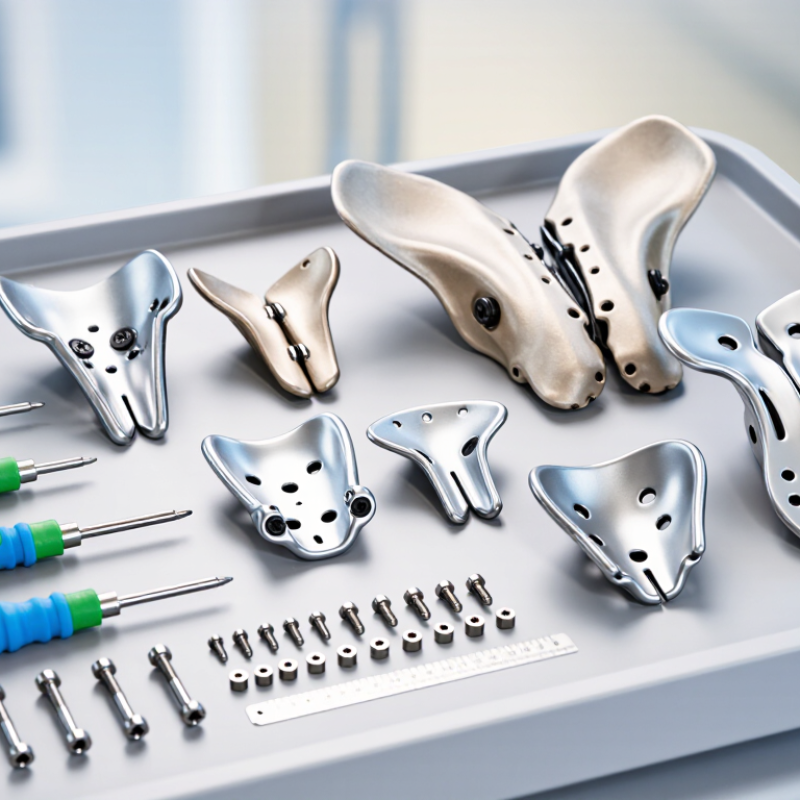
Cervical Plate Systems: Design, Function, and Clinical Purpose
Cervical plate systems support anterior cervical discectomy and fusion by stabilizing the treated segment. Their design usually combines a contoured plate, bone screws, and a locking mechanism. Low-profile geometry can reduce soft-tissue irritation, especially near the esophagus. Screw angulation also matters. It helps surgeons adapt fixation to different vertebral shapes and bone quality.
Clinical purpose remains practical: maintain alignment, limit graft movement, and encourage fusion during healing. Radiographic compatibility supports follow-up imaging, while clear implant markings assist surgical placement. A 2024 MarketsandMarkets report projects continued growth in the global spinal implants market through 2029, driven partly by degenerative cervical disease and an aging population. However, market growth does not prove clinical superiority. That distinction matters.
When comparing the top ten cervical plate system manufacturers, evaluators should examine published clinical data, revision rates, regulatory history, and surgeon training requirements. The North American Spine Society emphasizes patient selection, imaging, and postoperative assessment in cervical fusion care. Plate performance also depends on surgical technique, bone purchase, and graft preparation. The perfect plate does not exist. Some systems may reduce profile, yet offer fewer adjustment options. Others may provide strong fixation but complicate placement in small anatomy. Reliable decisions require evidence beyond promotional claims, including peer-reviewed studies, adverse-event reporting, and transparent long-term outcomes.
A credible top-10 list should measure evidence, not popularity. We screen manufacturers through regulatory records, clinical publications, quality certifications, and product transparency. FDA device databases and recall notices provide useful safety signals. They are not complete, however. Reporting practices vary between hospitals and countries.
Product performance receives the highest weight. We examine plate materials, locking mechanisms, radiographic visibility, screw-angle control, and compatibility with common surgical approaches. ISO 13485 certification supports quality-system review, while published clinical studies show whether designs perform beyond laboratory testing.
A 2024 systematic review reported postoperative dysphagia rates ranging from about 1.7% to 9.5% after anterior cervical procedures, depending on study design and follow-up. That variation matters.
We also compare manufacturing scale, surgeon training resources, complaint-response procedures, and market availability. Grand View Research’s 2024 cervical spine devices report identifies continued market growth, but growth alone cannot prove reliability. Data can be polished. Sometimes too polished.
We therefore check whether claims match technical documents and independent evidence. Manufacturers with limited public data may be excluded, even when their products appear promising. The final ranking combines weighted scores, documented experience, and a review of unresolved evidence gaps. Availability is assessed by region, not assumed globally.
Top 10 Cervical Plate System Manufacturers by Product Portfolio
The top ten cervical plate system manufacturers are often compared by portfolio depth, not name recognition. Strong portfolios typically include anterior cervical plates, variable-angle screws, fixed-angle screws, and compatible instruments. They may also offer multiple plate lengths, low-profile options, and modular locking mechanisms. These details matter in crowded operative fields.
Experienced surgical teams examine how easily each system adapts to different anatomy. A useful portfolio should support small cervical levels, multilevel procedures, and revision planning. Titanium alloys, radiographic visibility, screw angulation, and locking feedback deserve careful review. Instrument trays should feel organized, with predictable drivers and clearly marked implant sizes. Small details can affect operating time.
Clinical evidence remains essential. Product catalogs alone cannot prove safety or performance. Reliable manufacturers connect portfolio claims with testing, regulatory documentation, surgeon feedback, and published clinical data. A broader range is not automatically better. Too many options may complicate selection and inventory control. That distinction matters. Portfolio comparisons should also consider training support, traceability, packaging quality, and postoperative imaging needs. Even experienced evaluators can overlook workflow friction, especially when specifications appear similar. Careful comparison is still necessary.
This chart compares the breadth of publicly documented cervical plate system portfolios across ten anonymized market positions. The portfolio breadth index combines coverage of plate lengths, screw options, locking mechanisms, material choices, and available surgical configurations.
Top 10 Cervical Plate System Manufacturers: Comparing Materials, Technology, and Surgical Applications
Cervical plate systems differ in material, fixation control, and clinical purpose. Titanium remains common because it offers strength, corrosion resistance, and relatively favorable imaging. PEEK is mainly used in interbody devices, where its elastic modulus may better resemble bone. However, material choice alone does not guarantee fusion or fewer complications. A 2023 Grand View Research report estimated the global spinal implants market above US$10 billion, while cervical products represented a smaller, specialized segment. Market rankings can change because reports use different definitions.
The strongest systems usually combine low-profile plates, variable-angle screws, and reliable locking mechanisms. Three-dimensional porous structures may support bone attachment, but long-term clinical evidence is still developing. Surgeons often select anterior cervical discectomy and fusion systems for one or more treated levels. Corpectomy, trauma, and deformity cases may require longer plates and stronger reconstruction. Intraoperative imaging can improve placement, yet it cannot replace anatomical judgment. That point is easy to underestimate.
Tips: Compare radiographic artifact, screw angulation, plate prominence, and revision access. Review peer-reviewed clinical data, not only laboratory testing. Check whether the system fits the surgeon’s preferred graft or cage. A smaller plate may look attractive, but insufficient stability can create another problem. Always assess patient bone quality, alignment, and the number of surgical levels.
Anonymized comparison of leading cervical plate system product profiles. Company and brand names are intentionally excluded; specifications represent commonly documented configurations in anterior cervical surgery.
| Rank | Anonymized Profile | Primary Plate Material | Screw Material | Locking Technology | Plate Design | Typical Construct Range | Primary Surgical Applications | Radiographic Considerations |
|---|---|---|---|---|---|---|---|---|
| 1 | Manufacturer Profile 01 | Titanium alloy, commonly Ti-6Al-4V | Titanium alloy | Integrated screw-locking mechanism with fixed- and variable-angle options | Low-profile anterior plate with tapered ends | One to four cervical levels | ACDF Multilevel fusion Cervical discectomy | High radiopacity; MRI compatibility depends on the complete implant system |
| 2 | Manufacturer Profile 02 | Titanium alloy with polished or matte surface finishing | Titanium alloy | Variable-angle screws with mechanical anti-backout retention | Contourable or precontoured plate for anterior cervical alignment | One to three cervical levels | ACDF Segmental instability Degenerative disease | Metal artifact may obscure adjacent anatomy on CT or MRI |
| 3 | Manufacturer Profile 03 | Titanium alloy | Titanium alloy or cobalt-chromium alloy | Constrained locking interface designed to limit screw migration | Thin plate with broad central window for graft visualization | One to four cervical levels | ACDF Pseudarthrosis revision Adjacent-level support | Radiopaque plate permits postoperative position assessment |
| 4 | Manufacturer Profile 04 | Titanium alloy | Titanium alloy | Fixed-angle screws with optional variable-angle screw compatibility | Lordotic plate profile intended to support cervical contour | Two to four cervical levels | Multilevel ACDF Cervical kyphosis Spondylosis | Radiographic evaluation is generally straightforward because titanium is radiopaque |
| 5 | Manufacturer Profile 05 | Titanium alloy | Titanium alloy | Zero-profile or near-zero-profile locking interface | Compact plate geometry designed to reduce anterior implant prominence | One to two cervical levels | Single-level ACDF Two-level ACDF Reduced-profile constructs | Lower implant prominence may simplify evaluation of prevertebral soft tissues |
| 6 | Manufacturer Profile 06 | Titanium alloy | Titanium alloy | Variable-angle locking screws with selectable cranial-caudal trajectory | Multiple plate lengths with intraoperative contouring capability | One to six cervical levels, depending on system family | Long-segment fusion Corpectomy reconstruction Trauma stabilization | Long constructs require careful postoperative assessment of alignment and hardware position |
| 7 | Manufacturer Profile 07 | Titanium alloy or titanium alloy with surface treatment | Titanium alloy | Threaded or cam-lock retention mechanism | Low-profile plate with radiographic graft window | One to three cervical levels | ACDF Foraminal stenosis Disc-space reconstruction | Surface finish can influence imaging appearance but does not eliminate metal artifact |
| 8 | Manufacturer Profile 08 | Titanium alloy | Titanium alloy or stainless steel, depending on system generation | Locking screws with fixed-angle and variable-angle configurations | Broad plate footprint for increased construct coverage | Two to five cervical levels | Multilevel ACDF Trauma Post-laminectomy instability | Material-specific MRI conditions and artifact profiles must be verified before scanning |
| 9 | Manufacturer Profile 09 | Titanium alloy | Titanium alloy | Integrated locking cap or plate-capture mechanism | Precontoured plate with multiple screw trajectories | One to four cervical levels | ACDF Revision surgery Poor bone quality support | Postoperative radiographs are used to assess screw purchase, plate position, and fusion progression |
| 10 | Manufacturer Profile 10 | Titanium alloy; polymer components may be used in associated interbody devices | Titanium alloy | Low-profile screw-locking mechanism with optional rescue screw sizes | Modular plate system with selectable length and contour | One to three cervical levels | Primary ACDF Revision ACDF Short-segment stabilization | Associated PEEK interbody devices are radiolucent except for marker pins or markers |
Note: Titanium alloys are widely used in anterior cervical plating because of their strength, corrosion resistance, and established surgical history. Actual indications, sizes, MRI conditions, screw trajectories, and compatibility requirements vary by specific device and regulatory jurisdiction. Final implant selection should follow the applicable instructions for use and surgeon judgment.
A credible “Top 10 Cervical Plate System Manufacturers” list should begin with regulatory evidence, not marketing visibility. Manufacturers should demonstrate compliance with applicable medical device rules, such as the EU MDR or FDA requirements. ISO 13485 certification can indicate controlled quality processes. It does not prove every product performs equally well. That distinction matters.
Quality assessment should examine plate geometry, screw locking, material traceability, and fatigue testing. Titanium alloys may support biocompatibility, but documentation must confirm the selected grade and manufacturing controls. Inspectors should review sterilization validation, packaging integrity, and complaint-handling records. Clinical evidence deserves careful attention. Laboratory strength alone cannot represent surgical outcomes. Small details matter. A surgeon may notice screw insertion resistance, plate contour, or instrument grip within seconds.
Market considerations also influence a practical ranking. Hospitals often compare inventory consistency, training support, delivery reliability, and total ownership cost. A lower purchase price may hide instrument replacement expenses or limited technical service. Procurement teams should request current certificates, test summaries, and post-market surveillance data. They should also verify whether evidence applies to the exact cervical system under review. Broad corporate claims are not enough. No scorecard is perfect. Weighting clinical data, compliance, and service differently can change the order. That is a weakness worth acknowledging, not concealing. Independent review, surgeon feedback, and documented field experience can make the final comparison more reliable.
It is an implant used during anterior cervical discectomy and fusion. It usually includes a contoured plate, bone screws, and a locking mechanism.
The plate helps maintain spinal alignment and limit graft movement during healing. It also supports conditions that may encourage fusion.
A lower profile may reduce irritation near soft tissues, including the esophagus. However, reduced profile does not guarantee better clinical results.
Screw angulation helps the surgeon adapt fixation to different vertebral shapes and bone quality. Small anatomy can still make placement difficult.
They can compare plate materials, locking mechanisms, screw-angle control, imaging visibility, and surgical compatibility. Clear markings may help confirm placement during surgery.
Review regulatory records, clinical publications, quality certifications, and product transparency. Recall notices and complaint procedures can reveal useful safety signals.
No. Market growth may reflect aging populations and increased treatment demand. It does not establish clinical superiority.
Peer-reviewed studies, revision rates, adverse-event reports, and long-term outcomes deserve close attention. Promotional claims need independent verification.
A reported systematic review found rates ranging from about 1.7% to 9.5%. Results vary with study design and follow-up duration.
Public data may be incomplete, and reporting practices differ between regions. Some claims look polished. The evidence may still be thin.
This article explores the design, function, and clinical purpose of a Cervical Plate System used to support spinal stability after cervical procedures. It explains how plate geometry, screw options, fixation strength, profile, and compatibility with different surgical approaches can influence clinical use. The discussion also outlines how manufacturers are evaluated for a top-ten list, focusing on product range, engineering capability, manufacturing consistency, surgeon needs, and the availability of supporting instrumentation.
The comparison considers common material choices, design technologies, and applications across different cervical procedures, while emphasizing that product selection should be guided by qualified medical professionals and patient-specific requirements. It also reviews important regulatory expectations, quality-control practices, traceability, sterilization considerations, and market factors such as training, technical support, and supply reliability. Overall, the article provides a neutral framework for understanding how cervical plate manufacturers differentiate their products and how healthcare institutions can assess safety, performance, and suitability without relying solely on marketing claims.