Explore expert articles, clinical guides, surgical technique updates, and global market trends.
In-depth technical guides for pedicle screws, locking plates, PEEK cages, and surgical instruments.
Market analyses, regulatory developments, and export insights for orthopedic distributors worldwide.
China is a major sourcing destination for Maxillofacial Wire Mesh Plate products, but supplier comparisons require more than a low unit price. Buyers should examine mesh geometry, material traceability, dimensional consistency, packaging, and the manufacturer’s quality documentation. Small details matter. A thin, uneven edge can complicate contouring around a delicate facial defect.
Market figures need careful interpretation. Grand View Research’s craniofacial implants market report tracks a broader product category, not wire-mesh plates alone. Its estimates can help explain demand, but they should not be treated as China-specific sales data or proof of any supplier’s performance. For procurement, request current product specifications, batch records, sterilization information where applicable, and evidence supporting each quality claim.
Clinical judgment matters, too. Maxillofacial surgeon Edward Ellis III has published extensively on facial trauma and reconstruction; his work underscores the importance of restoring anatomy and function when planning treatment. This is a summary of that clinical principle, not a direct quotation. Not every mesh fits. The appropriate design depends on the defect, the surgical plan, and the treating team’s assessment.
This guide introduces leading Chinese manufacturers and the factors that distinguish their offerings. It also encourages buyers to verify claims independently, compare like-for-like specifications, and ask for documents before placing an order. A polished catalogue is useful, but it is not proof.
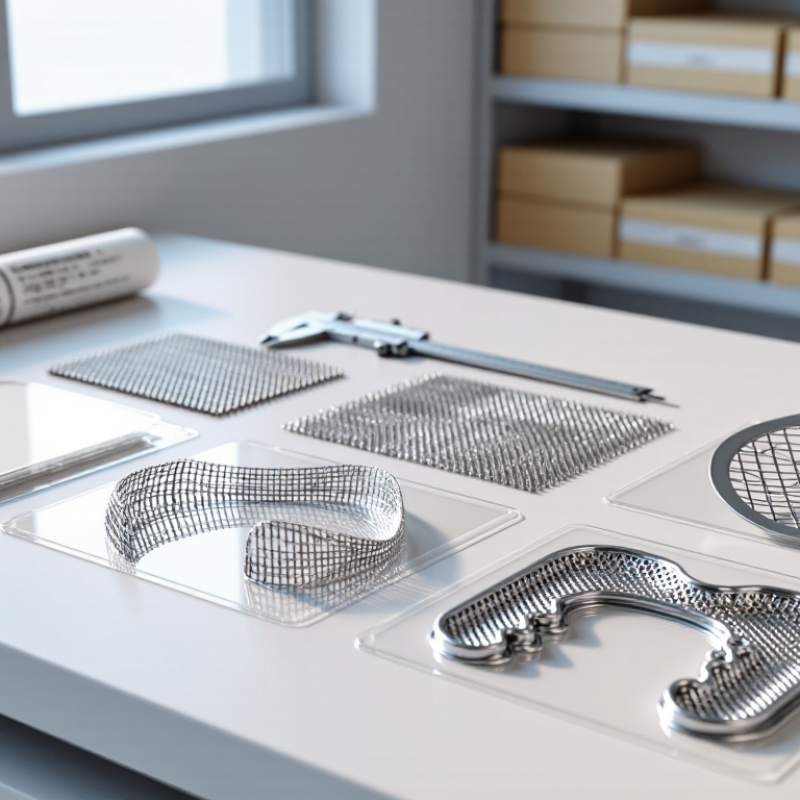
Maxillofacial wire mesh plates are thin, perforated implants used to support bone or bridge selected defects in the face. Their openings allow surgeons to shape the plate and secure it with small screws. Many are made from titanium, a material valued for strength and compatibility with medical imaging.
Clinical uses depend on the location and size of the defect. Mesh may help rebuild parts of the orbital floor, support facial contours, or reinforce bone after trauma or tumor removal. In the operating room, the surgeon trims and bends it to match the patient’s anatomy. A smooth edge matters. Even a small mismatch near the eye can affect support or comfort.
Planning includes reviewing scans, checking nearby nerves and sinus spaces, and choosing secure screw positions. The plate does not replace sound surgical judgment or healthy bone. Fit is not always perfect on the first try. That detail is easy to underestimate. Potential concerns include infection, exposure, irritation, or movement, so follow-up is important. The right design depends on the defect, tissue condition, and the surgeon’s assessment—not simply the plate’s shape.
This chart shows anatomy, not how frequently each procedure is performed. Maxillofacial mesh plates may be used to support orbital floor reconstruction or selected midface and mandibular defects. The appropriate implant and fixation depend on the defect, surrounding anatomy, and clinical plan.
China’s maxillofacial implant sector is structured as a connected manufacturing chain, not one uniform factory model. Some suppliers focus on titanium sheet, wire, or other input materials. Others handle laser cutting, forming, drilling, finishing, and packaging. A mesh plate may pass through several controlled steps before it is ready for evaluation. Small details matter. Burrs around a screw hole, for example, can affect handling during surgery.
Manufacturers often differ in how much work they complete in-house. A facility may make plates and meshes, while specialist partners provide material testing, sterilization, or packaging services. This arrangement can offer flexibility, but it also makes supplier oversight important. Buyers typically review material traceability, dimensional inspection records, process controls, and the scope of any quality-system documentation. A certificate alone does not explain how a specific product is made.
The sector also includes engineering teams that adapt designs to clinical requirements and production limits. Clear drawings, revision control, and communication between design and machining teams help prevent avoidable mismatches. Still, customization is not automatically an advantage. It can add validation work and complicate supply planning. Manufacturing capability should therefore be assessed product by product, with evidence from relevant processes rather than broad claims about capacity.
When evaluating Chinese maxillofacial wire mesh plate manufacturers, look beyond catalog photos and quoted prices. Ask how the material is identified and traced from incoming stock to finished plate. Request inspection records for thickness, hole spacing, edge finish, and dimensional tolerances. Details matter. A small burr or uneven edge may affect handling during shaping.
Review the manufacturer’s quality system, process controls, and documentation for product changes. Ask whether sample plates can be examined under magnification and measured against the stated drawing. Check how the supplier controls forming consistency, packaging, and compatibility with the intended sterilization process. Verify that its documentation supports the regulatory requirements of your target market; requirements differ by destination.
Tips: Request a recent inspection report, material traceability example, and written change-control process. Compare samples from more than one production run, if possible. A polished audit file is useful, but it cannot show every production weakness. I would still ask direct questions and record unanswered points before making a decision.
Choosing a maxillofacial wire mesh plate manufacturer in China requires more than comparing prices or catalog images. Ask whether the plate uses commercially pure titanium or a specified titanium alloy, and request certificates linked to production lots. Details matter. A clear material designation helps buyers assess strength, corrosion resistance, and intended use.
Manufacturing controls should be documented, not described only in sales language. A quality system aligned with ISO 13485 can support controlled processes, staff training, and corrective actions; it does not prove every product is suitable. Biological evaluation should follow applicable requirements and risk assessment. Not a shortcut.
For mesh plates, check hole spacing, thickness, edge finish, and consistency between drawings and finished parts. Small defects count. Ask for inspection records, lot traceability, cleanliness controls, and validated packaging or sterilization processes when products are supplied sterile. Find out how rejected pieces are isolated and tooling changes approved. Samples help, but one clean sample cannot represent an entire production run. That limitation deserves attention.
Shortlisting a maxillofacial mesh plate supplier takes more than comparing prices and catalog photos. Request drawings that specify alloy, thickness, hole pattern, edge finish, and dimensional tolerances. Ask how each production lot is linked to material records and inspection results. Small details matter. A rough edge or inconsistent opening may affect handling and fit, so review samples with qualified clinical and engineering staff.
Check the supplier’s quality-system documents, manufacturing scope, and certificate status with the issuing body. Confirm that the documentation applies to the actual production site and product type. Ask for inspection procedures, nonconformance records, change-control practices, and packaging information. If sterilization is involved, clarify who validates the process and how packaging integrity is assessed. A polished certificate alone proves little.
A site audit or independent inspection can help verify equipment, staff training, cleanliness controls, and traceability in practice. Consider a trial order, then compare delivered parts against approved drawings using documented inspection criteria. Requirements vary by destination market and intended use, so obtain specialist regulatory advice. Even a careful audit can miss problems; keep checking supplier performance after approval.
It is a connected supply chain, not one factory model. Different suppliers may provide materials, machining, finishing, or packaging.
Review thickness, hole spacing, edge finish, and dimensional tolerances. Look closely for burrs around screw holes.
Ask for an example showing how incoming material is identified and linked to finished plates. Keep it specific.
Yes. Ask for recent records covering dimensions and edge quality. A certificate alone tells you little about one product.
Some facilities use partners for testing, sterilization, or packaging. Clarify who performs each step and how records are maintained.
No. A tailored design may fit a specific need, but it can add validation work and complicate supply planning. Not always.
Compare samples from different production runs, if possible. Measure them against the stated drawing and inspect their edges.
Request a material traceability example, an inspection report, and written change-control procedures. Record unanswered points. I might still miss something.
This article explains the role of the Maxillofacial Wire Mesh Plate in reconstructive and trauma-related procedures, where a contoured mesh may help support or stabilize facial bone structures as they heal. It outlines how China’s medical implant manufacturing sector includes manufacturers with different production capabilities, product ranges, and quality systems, so buyers should assess suppliers according to clinical requirements rather than price alone.
The guide also presents practical criteria for evaluating potential manufacturers, including material traceability, manufacturing processes, quality-control procedures, technical documentation, and the ability to provide consistent product specifications. It encourages buyers to verify supplier information, review relevant certifications and test records, clarify communication and after-sales arrangements, and request samples or supporting documents when appropriate. These steps can help create a structured shortlist and support informed supplier selection.